"Devgar" - the learning curve

With 8+ years in embedded systems, I specialize in firmware development for ARM-based microcontrollers and wireless communication. I combine corporate best practices with startup agility, leading projects from concept to deployment.
Following ambition is not always the best strategy. Sometimes, the mountain you need to climb is simply too steep. I didn't realize what kind of technology I was trying to tackle alone, in a short time, with additional problems that I put on my own shoulders.
What did I want to do? I wanted to create a containerized environment with Yocto inside. I wanted to build an application for Raspberry Pi that would run Home Automation and to which I could connect sensors via some yet undefined protocol.
The simplest solution was to use a ready-made distribution — Raspberry Pi OS. However, it is not widely used in professional projects. I wanted to learn what appears most frequently in job offers and, at the same time, solve my engineering problem. So, I decided on Yocto.
The first few days I struggled with container-related problems, which, of course, I had created myself. Then, after verifying that everything worked without the container, I started focusing on the configuration and managed to create the first image to upload.
But here came another fundamental problem — I had never had the pleasure of playing with Raspberry Pi before. I know what UART is and how it works; I built an image that should contain a full console, connected the device to a USB adapter, inserted the card, and what happened? Nothing. Silence. What's going on? I have no clue!
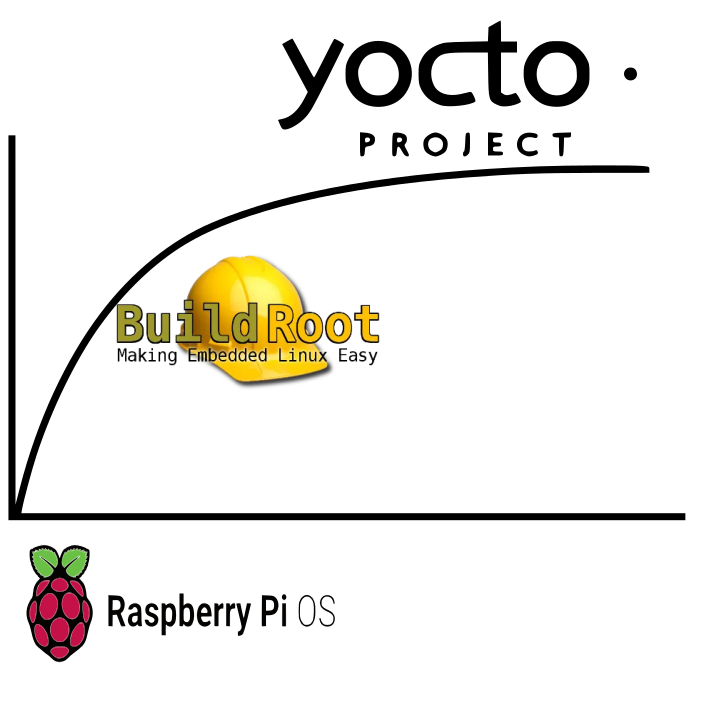
A mountain must be conquered in stages! I’ll start simple — I’ll install Raspberry Pi OS. I will check if the UART console is enough to play with this system. If so, I will install a Home Automation server, try to connect the first sensor, and link it to my system.
What's next? I guess it’s time for Buildroot. I will try to do exactly the same but by creating my own image. Only after completing these two stages will I start working with Yocto. I’ve lost a lot of time and energy, but I think I’ve already learned a lot. In the next post, I will try to describe my interactions with this operating system.


